Monday, April 27, 2009

1 Hour : Make It : Snickerdoodles

image via Betty Crocker

We're going to make snickerdoodles. My kids like to help with measuring, mixing, and in this case, rolling the balls in the cinnamon and sugar.

Snickerdoodles
1 cup soft butter
1 cup sugar
1/2 cup brown sugar
2 eggs
2 tsp. cream of tartar
1 tsp. baking soda
1/4 tsp salt
3 cups flour

Beat together first four ingredients. Combine remaining ingredients in a separate bowl, then blend into wet mixture. Set aside. In small bowl, combine 2 Tbsp. sugar and 2 tsp. cinnamon. Form small balls with the cookie dough and roll each in the sugar/cinnamon mixture. Place on greased cookie sheet and bake at 400 for 8-10 minutes.

Read More...

Friday, April 24, 2009

Friday Focus : Everyday Science, Part 3

image via flickr.com


Exploring the five senses is a fun way to teach a little science. I've gathered some ideas from the book, How to Raise an Amazing Child the Montessori Way:

Taste: Make snacktime a taste-testing experience with a variety of foods; encourage your child to put the salty, sweet, and tart foods in different groups before tasting them.
Touch: We love making a mystery bag with different objects like small toys, coins, shells, etc. The game is simple: without looking, figure out what item you are touching, and then pull it out to see if you're right.
Sound: Try the silence game: once silence is signalled, challenge your child to remain quiet until he hears you whisper his name. He'll have to listen very carefully, and he may even learn a little self-discipline along the way.
Sight: Gather paint swatches and help your child arrange them from darkest to lightest color; or, for a harder challenge, arrange them from darkest to lightest hue.
Smell: Provide several bottles containing very different smells and ask which ones he can identify, which he likes, and which he dislikes. (Examples: lotion, lemon juice, vanilla, flavor extracts, spices, herbs.)

Read More...

Wednesday, April 22, 2009

15 Minutes : Know It : Earth Day


image via noaa.gov
In honor of Earth Day today below is a list of simple items we all can do to help our homes be a little more green. We're all doing our best but, if you're like me, there's certainly more we can be doing. Please leave a comment with some of your favorite green-techniques.
  • Recycle, recycle, recycle! The city bins are a lot cheaper than your trash bin and you'll be amazed at how much you contribute each week.
  • Use Environmentally-friendly cleaners. They're not only better for the environment but much better for your family's health. We love Method products and Costco's Environmentally-friendly laundry detergent.
  • Limit disposable water bottles. Our family has really liked switching to a Brita water pitcher and Camelbak water bottles. My kids love having there own water bottle and use it ALL day long. It keeps them drinking more water and we're not adding waste by constantly throwing out plastic bottles.
  • Plant a garden! We're still working on setting ours up but really looking forward to it.
  • Start a compost. Free fertilizer for your garden and a great way to get rid of kitchen scraps.
  • Donate old clothing and unwanted items to local charity groups. Your junk could easily be another one's treasure.

Read More...

Monday, April 20, 2009

15 Minutes : Play It : Nature Walk

The perfect weather today encouraged us to take a quick walk around the block. We like to take a small pail to collect treasures such as pinecones, rocks, sticks, leaves, etc. We also try to name things around us--tulips, daffodils, dandelions, apple trees, magpies, robins. I often ask the children questions such as:
What sounds do you hear?
What flower colors do you see?
What does the bark of that tree feel like?
What is your favorite bird?
Do those blossoms have a scent?

Even these little conversations teach them about beauty and variety in their world. I smile when I hear my four-year-old point out quail, or my six-year-old notice hyacinth.

Read More...

Friday, April 17, 2009

Friday Focus : Everyday Science, Part 2

image via here
An important part of discovery is making predictions. Children use what they already know to make guesses, then they test those guesses, and finally, they gain a new understanding based on the outcome of their test. This process is not limited to typically scientific experiments. Children make predictions when they try new foods, learn new words, and play with their friends.

Because children love playing in water anyway, a simple sink and float activity is ideal for teaching and recording the prediction process. Collect many items around your house: small toys, coins, a sponge, different types of balls, etc. Together with your child, create a simple chart to record the results of the experiment. Then, ask your child to predict whether each item will sink or float in a small tub of water. After he tests his prediction and records the answer, try the same test in a larger container of water. What things still sink or float? What things have a changed result?

For older children, you can discuss the two main factors that influence sinking or floating: density and buoyancy. Here is a great explanation of buoyancy. Here is a basic definition of density.

Children's literature about sinking and floating:
  • Floating and Sinking by Franklyn M. Branley
  • Keep it Afloat! By Julian Rowe and Molly Perham
  • Mike Swan, Sink or Swim by Deborah Heilgman
  • Mr. Gumpy’s Outing by John Burningham
  • The Magic School Bus: Ups and Downs by Jane Mason, Bruce Degen, and Joanna Cole
  • Christopher Columbus by Stephen Krensky
  • Mr. Archimedes’ Bath
  • Will It Float? by Pamela Allen

  • Read More...

    Wednesday, April 15, 2009

    15 Minutes : Know It : TV-Turn Off Week

    image via groovygreen.com


    Next week (April 20-26) marks the annual TV-Turn Off Week. According to a study published by the Children's Hospital and Regional Medical Center in Seattle in April of 2004 for each hour of t.v. a child watches there is a 10% increase in the risk of attention deficit disorder (ADD). We may all be guilty of using the television a little too often once in a while but for next week our family is committed to keeping the TV OFF. Will you join us?

    Read More...

    Monday, April 13, 2009

    1 Hour : Read It : Chasing Vermeer

    image via bn.com
    My fourth-grader enjoyed Chasing Vermeer so much that he asks me daily if I've read it yet. He loves action-adventure and puzzles, and this books is a great combination of both, with a sprinkle of culture as well. I'm eager to finish this one so we can have our own book club session together.

    Read More...

    Saturday, April 11, 2009

    15 Minutes : Make It : Easter Coloring

    image via redleadpaperworks

    Need some Easter coloring pages today? Here are some that I printed out for my kids:

    Eggs on a tree

    Hedgie's Easter
    Bunny & chick egg
    Bunny & flowers
    Vintage bunnies
    Plain egg

    Read More...

    Friday, April 10, 2009

    Friday Focus : Everyday Science, Part 1

    image via here

    Ever conscious of combining daily life with education, I enjoy finding ways to teach my children during our normal activities: cooking, coloring, yard-work, walks...all become learning experiences when I ask and answer questions. Because I'm organizing a science day at the school, simple science experiments and discoveries are on my mind lately. I've been consulting a couple little books called Simple Kitchen Experiments and Simple Nature Experiments, from a series that encourages discovery during everyday activities. To start off very easily and with minimal preparation, I might try some salt activities.

    Salt wilts vegetables (and our bodies)
    from Simple Kitchen Experiments

    Try it: While making salad for dinner, salt two or three cucumber slices or lettuce pieces, set aside, and let stand for a while. The vegetable will wilt and/or shrivel.

    Say it: Though our bodies need the two minerals (sodium and chloride) that salt provides, too much salt can cause health problems. In the demonstration, the salt draws the water out of the cells of the vegetable; the same thing happens to our bodies when we eat too much salt. When the amount of sodium in the fluid surrounding our cells is too high, the "wilted" cells don't function properly. You have probably noticed that you feel thirsty after eating salty foods such as potato chips. Your body needs extra water to dilute the salt you've just eaten.

    More Salt Experiments

    Read More...

    Wednesday, April 8, 2009

    15 Minutes : Know It : Easter Traditions


    My kids can hardly wait for the Easter Bunny to make his arrival this week. Since our family has deep religious beliefs we let the Easter Bunny leave his goodies Saturday morning so Sunday can be devoted to thoughts of our Savior, Jesus Christ. Below are listed some of the tips and tricks of our Easter Bunny. How about you? What are your favorite Easter traditions?

  • Friday night empty baskets are left on the kitchen table labeled with each child's name (so he won't mix up the baskets, of course) so Mr. Bunny can have easy access to fill and hide them.

  • On Saturday morning the treasure hunt begins. We limit the hiding to certain areas of the house and the kiddos love finding their own baskets as well as helping their siblings.

  • Since I'm not a huge fan of piles of candy around my house we try to get creative when filling their baskets. Items usually include: their new Easter clothes (they're getting them anyway, why not make it a surprise), a yogurt smoothie, organic pop tarts, a couple of candy filled plastic eggs (I can't resist), a couple of toy trinkets, and this year a surprise DVD gift (which I'm most excited about). Hopefully it's enough to get them excited but not too much to overwhelm them.

  • We also try to include a family Easter Egg hunt with all the cousins. Some of our favorite egg fillings include money, stickers and goldfish.


  • Read More...

    Tuesday, April 7, 2009

    15 Minutes : Play It : Colors

    image source

    I'm trying to teach my child about colors and want him to be able to identify them. One fun way I've thought of is through a fun treat. This would really catch his attention. My first plan was to use M&Ms but because Spring is here and Easter's right around the corner I think jelly beans are a better fit. I would start of by showing some flash cards or pictures and then end with this type of fun activity. Now, my only challenge will be to make sure he focuses on the color of the jelly bean not just eating them.

    Read More...

    Thursday, April 2, 2009

    15 Minutes : Make It : Kite


    This kite template from Family Fun lets you create a simple kite from one piece of paper. It's a perfect activity for those windy, spring days.

    Read More...

    Wednesday, April 1, 2009

    Our Apologies

    RedRoko will no longer be operating. We are grateful for your support and are so sad to be done with this great adventure.


    APRIL FOOLS'
    (Oh, you should hear the doosies the four year-olds are pulling off at my house.)

    Read More...

    Friday, March 27, 2009

    Friday Focus : Creating a Literate Home, Part 4

    image from MS

    Another tip from PBS is to have props for pretend play. Pretend play actually contributes to literacy skills, and let's your kid have fun at the same time. Here are some ideas for items to collect and keep in a prop or dress up box:

    - old necklaces and ties
    - hats
    - scarves
    - boxes (old cereal, packaging etc.)
    - toy animals, dolls
    - old dishes, silverware
    - blankets
    - old phone or cell phone
    - play money
    - bags and wallets
    - shoes
    - sunglasses and glasses

    If your child has a hard time thinking of what he/she can pretend to do, here are some ideas to get them started:

    - play store (grocery, toy, clothing, bake etc.)
    - play restaurant (fast food, fancy or sit-down)
    - play hospital, fire station or police station
    - play farm or circus
    - play school or work
    - play pirates

    Read More...

    Thursday, March 26, 2009

    15 Minutes : Play It : Toddler Twister

    image via flickr
    activity idea from "The Everything Toddler Activities Book"

    My little girl is just learning her colors and shapes, but the concept isn't quite sticking yet (everything is blue or white right now). I like this activity because it incorporates movement and action in learning. She has fun, and because it is game she doesn't get bored easily. Here's how to play...

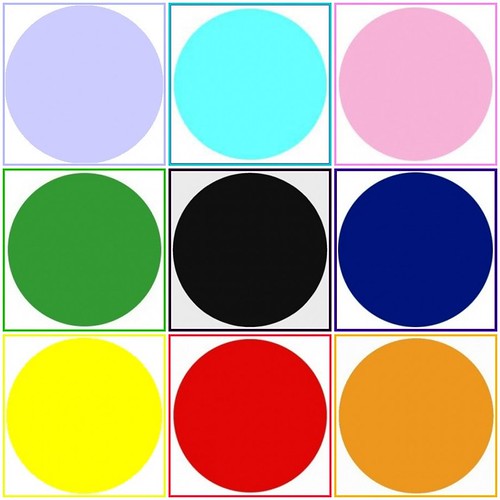
    Cut large circles out of different colors of paper and place on the floor. Call out simple actions like "put your hand on the red circle". You can also cut out different shapes for your child to find and/or call out different types of actions for your child to perform like "jump on the red circle" or "put one finger on the red circle". The great thing is you can customize the game to whatever your child is learning at that time.

    Read More...